
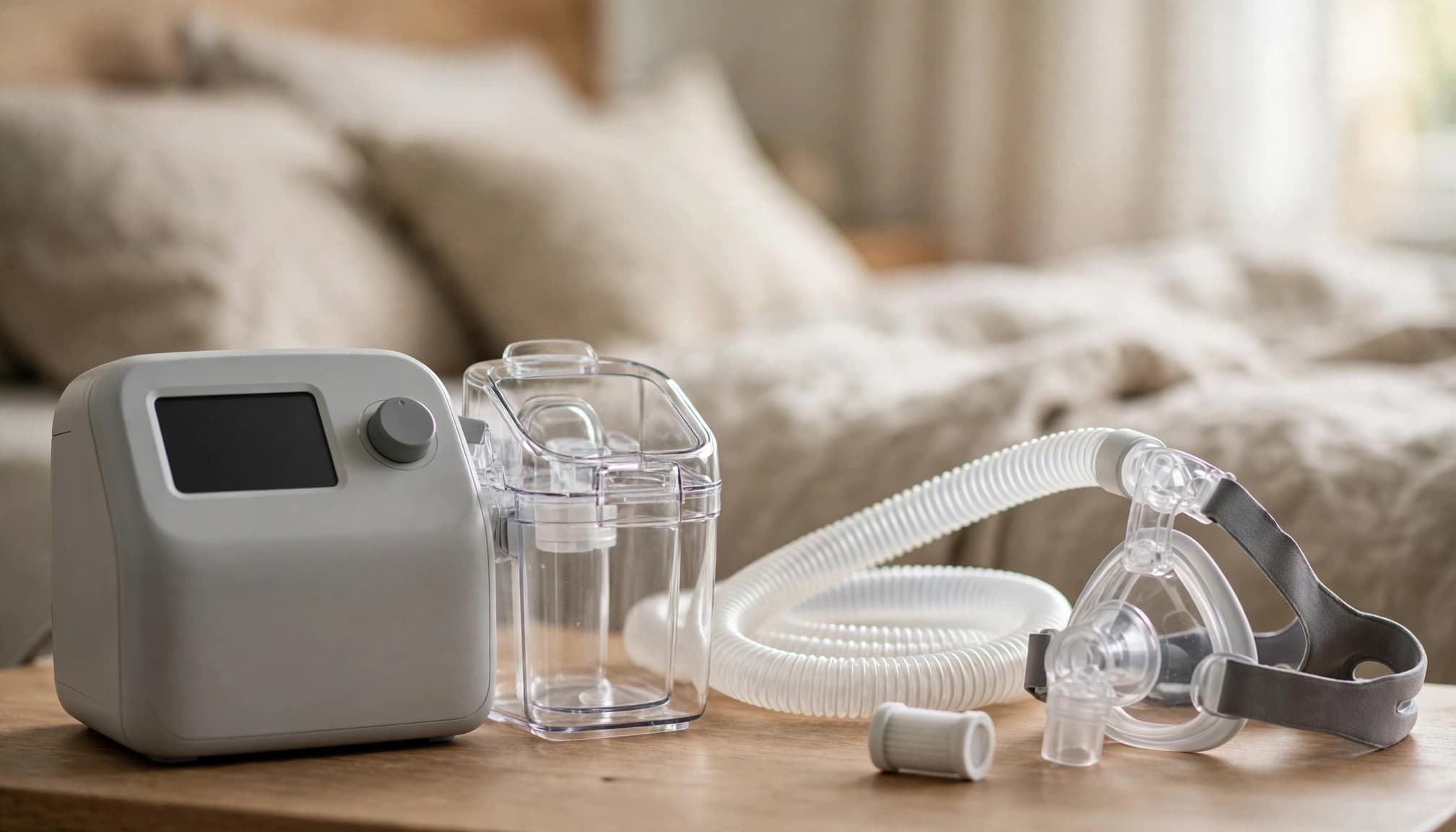


Is CPAP Equipment Covered by Private Insurance in Florida?

Castellanos Health Solutions • October 28, 2026

Share this article

Yes, private health insurance in Florida can cover prescribed CPAP equipment, but coverage depends on your specific plan. CPAP insurance coverage may include the machine and certain supplies, with deductibles, supplier restrictions, and approval requirements affecting what you pay.

A covered benefit can still leave you with a substantial bill, especially before you've met your deductible .

The important distinction is between equipment your clinician prescribes and equipment your insurance agrees to pay for.

Key Takeaways

  • Private plans don't all cover CPAP equipment under the same terms.
  • CPAP machines may fall under durable medical equipment benefits, while masks and other supplies may have separate billing rules.
  • A prescription doesn't replace any required prior authorization or in-network supplier requirement.
  • Medicare and Florida Medicaid have their own CPAP policies. Their coverage and replacement rules don't automatically apply to private insurance.

How Private CPAP Insurance Coverage Works

Your plan's benefit documents determine whether CPAP equipment is covered and what conditions apply. Living in Florida doesn't create one uniform CPAP benefit across every employer, Marketplace, or individual policy.

The type of coverage matters

Employer-sponsored insurance and individual major medical plans can have different equipment benefits, networks, and exclusions. Even plans offered by the same insurance company may handle CPAP differently.

Also, supplemental coverage isn't a replacement for comprehensive medical insurance. A policy that pays a fixed cash benefit for a covered event doesn't necessarily reimburse CPAP equipment through a durable medical equipment benefit.

That distinction matters when comparing monthly premiums. A lower premium alone doesn't tell you how much ongoing sleep apnea treatment will cost.

Benefit documents define the details

The Summary of Benefits and Coverage provides a standardized summary of a health plan's benefits and cost sharing. More detailed policy documents explain equipment exclusions, limitations, and approval conditions.

A DME benefit is a starting point, rather than automatic approval for every CPAP device or accessory. The equipment still has to meet the plan's applicable coverage terms.

Our Florida health insurance FAQs explain broader differences among benefits, networks, and plan costs.

Which CPAP Devices and Supplies May Be Covered?

CPAP stands for continuous positive airway pressure. The machine delivers pressurized air through a mask to help keep your airway open during sleep.

Insurers may classify the machine as durable medical equipment , often shortened to DME. This category generally covers reusable medical equipment intended for use at home.

Masks, cushions, tubing, filters, headgear, and humidifier components may be covered as related supplies or accessories. However, coverage of the machine doesn't establish unlimited coverage of everything used with it.

Separate items can have different billing, quantity limits, and replacement intervals. A humidifier may also be part of the machine or billed separately, depending on the equipment and benefit rules.

CPAP, auto-adjusting positive airway pressure, and bilevel devices aren't interchangeable insurance categories. Coverage for one device doesn't automatically establish coverage for another.

Comfort accessories and cleaning products also shouldn't be treated as covered merely because they're marketed for CPAP users. Their usefulness and their insurance eligibility are separate questions.

Prescriptions, Prior Authorization, and Supplier Networks

Private plans may require medical documentation, advance approval, or a particular equipment supplier. These requirements serve different purposes, so completing one doesn't necessarily satisfy the others.

A prescription and prior authorization are different

A CPAP prescription identifies the treatment your clinician orders. Clinical records, including a sleep study when required, support the medical reason for that treatment.

Prior authorization is the insurer's review before equipment is supplied or billed. When a plan requires it, a prescription alone doesn't complete that review.

Authorization can also apply to a particular device or service period. An approval for initial equipment doesn't necessarily cover later replacement equipment or a different type of machine.

Prior authorization doesn't remove your deductible, copay, or coinsurance. An approved device can still create an out-of-pocket bill.

The equipment supplier has a separate network status

Your sleep specialist's network participation doesn't establish whether a CPAP supplier is in-network. The physician and equipment company are separate providers for insurance purposes.

Depending on the plan, an out-of-network supplier may mean higher costs or no routine equipment benefit. A supplier that accepts an insurance company's claims isn't necessarily contracted with every plan that company offers.

Likewise, buying equipment online doesn't automatically make the purchase reimbursable. Insurance payment depends on the benefit, the supplier arrangement, and the applicable claim requirements.

These distinctions help explain why a doctor's order and an equipment quote can produce different expectations about the final bill.

What You May Pay for Covered CPAP Equipment

There's no single Florida-wide CPAP copay or coinsurance rate. Your cost depends on your plan's benefit structure, the covered charges, and how much of your deductible you've already satisfied.

Deductibles, copays, and coinsurance

A deductible is the amount you pay for services subject to that deductible before the plan starts sharing those costs. Coinsurance is your percentage of a covered charge. A copay is a fixed amount assigned to a covered service or item.

A plan may apply different cost sharing to equipment, supplies, specialist visits, and sleep testing. As HealthCare.gov explains about covered services, coverage can still involve deductibles, copayments, and coinsurance.

Also, an out-of-pocket maximum doesn't cap every insurance-related expense. Premiums and excluded purchases generally don't count. Our explanation of Florida out-of-pocket maximums covers that distinction.

Rental and purchase billing affect the timing

A machine may be billed as a purchase or through rental payments, depending on the plan. Rental billing can spread charges across several months instead of producing one equipment claim.

That timing matters when a deductible resets during the rental period. Your share can change even though you're using the same machine.

Supply claims can add costs beyond the device itself. Therefore, the first equipment payment may not reflect the full cost of treatment over the year.

Replacement Schedules and Continued Use

Replacement supplies aren't automatically covered whenever you want a new item. Plans may set frequency limits for masks, cushions, filters, tubing, and other components.

There isn't one universal private-insurance replacement schedule for Florida residents. Medicare schedules found online shouldn't be presented as the schedule for an employer or Marketplace plan.

A replacement interval also doesn't mean an item must be replaced on that date. Coverage limits, the item's condition, and the manufacturer's care instructions address different issues.

A replacement machine is a separate question from routine supplies. Age, damage, warranty service, and continued medical need can affect how the request is handled.

Some coverage arrangements also require follow-up documentation or evidence of continued use. Those conditions shouldn't be assumed to match Medicare's requirements.

If mask discomfort, air leaks, or dryness interfere with treatment, your treating clinician can help address the problem. Changing or stopping prescribed therapy solely because of a billing concern can leave sleep apnea untreated.

Private Insurance, Medicare, and Florida Medicaid Are Different

Private insurance, Medicare, and Medicaid operate under different coverage rules. A policy published for one program doesn't establish benefits under another.

Medicare has its own CPAP criteria

CMS places qualifying positive airway pressure devices and accessories within Medicare's DME benefit.

Its CPAP coverage guidance describes continued coverage requirements after the first 12 weeks. These include a practitioner reassessment documenting adherence to prescribed therapy and improvement in obstructive sleep apnea symptoms.

Medicare also uses a five-year reasonable useful lifetime in its device replacement rules. That doesn't mean every privately insured patient receives a new CPAP machine every five years.

Medicare Advantage remains Medicare coverage, even though private insurers administer those plans. It shouldn't be confused with an employer or individual commercial policy.

Florida Medicaid follows state program policies

Florida Medicaid has a separate respiratory DME coverage policy through the Agency for Health Care Administration.

That policy addresses CPAP, bilevel devices, humidifiers, and related supplies. For example, a prescribed humidifier may be reimbursed separately when it isn't integral to the device. Rental includes operational supplies and their replacement during the rental period.

These are Medicaid provisions, not promises about private coverage. A familiar insurance company name on a Medicaid managed-care card doesn't turn those benefits into commercial insurance benefits.

Frequently Asked Questions

Does a covered sleep study mean my CPAP is approved?

Coverage of a sleep study doesn't automatically approve a CPAP machine. The test and the equipment are separate services, potentially involving different providers and benefit requirements.

The sleep study can support the medical need for treatment, but the equipment claim still falls under the plan's applicable coverage rules.

Can I buy a CPAP machine myself and receive reimbursement?

A self-paid purchase isn't automatically reimbursable. A plan may require an eligible supplier, prior authorization, or other documentation before paying for equipment.

Buying outside that process can leave the purchase entirely at your expense. A retail receipt alone doesn't establish that an insurer owes payment.

What happens if a CPAP claim is denied?

The denial notice identifies the reason and explains available appeal procedures. Missing records, a supplier issue, an excluded item, and a medical-necessity decision are different problems.

An appeal should address the stated reason with relevant documents, such as the prescription, clinical records, or authorization information. The notice also sets out the applicable filing deadline.

The Bottom Line for Florida Residents

CPAP equipment can be covered by private health insurance in Florida, but the plan determines the benefit and your share. Coverage and cost are separate questions , particularly when equipment, supplies, and testing generate different claims.

At Castellanos Health Solutions, we help individuals and families compare plans beyond the monthly premium. For ongoing CPAP treatment, the equipment benefit, supplier network, and recurring supply costs all belong in that comparison.

Recent Posts

By Castellanos Health Solutions • October 31, 2026
Yes, Florida health insurance can cover home health care when you meet your plan's requirements. Coverage depends on the type of insurance and the care you need, particularly whether it's skilled medical care or help with daily activities. Medicare, Florida Medicaid, and priva...

By Castellanos Health Solutions • October 30, 2026
Yes, most comprehensive private health plans in Florida cover medically necessary outpatient surgery, but coverage doesn't mean the procedure is free. Your outpatient surgery coverage depends on the operation, plan rules, provider network, and cost-sharing requirements . Emplo...

By Castellanos Health Solutions • October 29, 2026
Florida health plans require a specialist referral when the policy makes primary care approval a condition of coverage. This is common with HMOs, while PPOs and many EPOs allow direct specialist appointments. Florida specialist referrals depend on your exact plan , not just th...

By Castellanos Health Solutions • October 27, 2026
Yes, ACA-compliant individual and small-group health plans in Florida cover maternity and newborn care. However, short-term insurance and limited-benefit policies don't offer the same protections. When choosing maternity coverage in Florida, the biggest differences are often y...

By Castellanos Health Solutions • October 26, 2026
Yes, many private health plans in Florida cover physical therapy, but benefits depend on your specific policy and medical necessity . Physical therapy coverage can still involve deductibles, copays, approval requirements, and visit limits. A covered benefit doesn't mean every...

By Castellanos Health Solutions • October 25, 2026
Yes, many Florida health insurance plans cover urgent-care visits, but coverage depends on your specific policy, the clinic's network status, and the services you receive. A covered visit can still leave you with a copay, deductible, or coinsurance . Florida urgent care covera...

By Castellanos Health Solutions • October 24, 2026
Some private health plans cover hearing aids, while others exclude the devices or offer limited benefits. In Florida, hearing aid insurance coverage depends on your exact policy, including any separate hearing benefit. A covered hearing test doesn't automatically mean the plan...

By Castellanos Health Solutions • October 23, 2026
To find an in-network lab, start with your insurer's directory for your exact plan, then review the location and ordered tests with member services. Network participation and test coverage are separate , so a doctor's order alone doesn't settle both. For Florida residents, a f...

By Castellanos Health Solutions • October 22, 2026
A sudden illness or injury can send you to the nearest emergency department, not the hospital in your plan's network. Florida emergency room coverage depends on your specific plan, but federal protections generally apply to emergency care even when the hospital is out of netwo...
By Castellanos Health Solutions • October 21, 2026
An MRI or CT scan can lead to a large bill if you don't know how your plan handles imaging. MRI coverage in Florida depends on your specific policy, the reason for the scan, the imaging center, and whether the plan's approval steps are complete. A scan may be covered but still...
Show More